
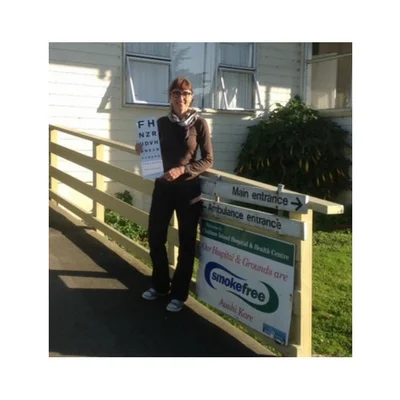
In May Sally headed across to the Chatham Islands to check the eyes of a batch of new sailors. For the second time, Mahurangi Technical Institute (MTI) ran their training program on the Chathams for this isolated group. MTI runs courses from introductory level through to enabling someone to skipper ocean-going super yachts up to 24m long. Part of the requirement is good vision and that is why Sally went across too. She tested 14 students on the course, making sure their vision was seaworthy. During her visit she also saw a number of local people, making their eye care easier than a 3 hour flight across. As a visiting optometrist Sally worked from the local hospital and health centre.
Low Vision Essentials
For people with low vision glasses are not always the solution. We can help match you with the best tools to help achieve your goal, for example reading mail. There are other suggestions too, to help those less able to see.
Bigger
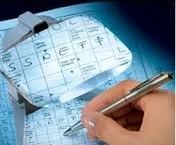
- Use magnifiers, hand held or stand for reading, sewing etc
- Use large simple labels in the pantry and other storage places
- Use larger print in diaries, address and phone books
- Enlarge recipes, music etc with a photocopier
- Move closer
Bolder
- Black-on-white or white-on-black gives the best contrast. Use black marking pens to improve your ability to read
- Put white strips on the edge of steps
- Pour dark liquids into white cups and light liquids into dark cups
- Use plain dark tablecloths or mats with white crockery
Brighter

- Improved general and focused task lighting to make things easier to see
Using other senses
- Touch, add tactile marking to appliances
- Be organised
- Eliminate clutter around the home
- Keep things in their place
Myopia Control
Myopia, or shortsightedness, means distance objects appear blurred and out of focus. In everyday language we use ‘myopic’ to describe a person with a short range focus. Myopia is a growing problem throughout the world. Uncorrected myopia is the second most common cause of blindness globally. Estimates show 22.9% of the world suffers from myopia. Of particular concern are the group with very high prescriptions, or high myopia.
Myopia is not just the need for glasses and high myopia is not simply thicker lenses. With myopia comes increased risk of eye conditions like glaucoma, retinal detachment and macular degeneration. These risks increase with higher prescriptions.

It is understood there is a genetic component to myopia. Having one parent who is myopic doubles the risk of becoming short sighted. Two parents increase the risk by 8 times. Environmental factors also seem to influence the development of myopia. These include time spent indoors versus outdoors. More time outdoors seems to result in less myopia. Spending a lot of time on close range work, reading and screens, is also associated with more myopia.
If a child is myopic, the likelihood is this will progress as they grow; while some children have slow rates of progression, for others vision changes rapidly.
How to control myopia in children has become a hot topic for optometrists. Fortunately there are effective ways to intervene and slow myopia progression. These include Ortho-Keratology (hard contact lenses), multifocal contact lenses, atropine eye drops and progressive or bifocal glasses. Talk to us about the best options for you or your children.
For more information see our resource page, or contact us directly.
Glaucoma A Personal Connection
July is Glaucoma Awareness month and we are promoting the importance of having your eyes checked. We want to raise awareness because glaucoma is a disease with no symptoms. Called the ‘silent thief of sight’, it is estimated more than 50% of people with glaucoma do not realise it.
As optometrists we are looking into people’s eyes every day, searching for early signs of glaucoma. Glaucoma is the leading cause of preventable blindness in New Zealand, which is why we always support Glaucoma New Zealand’s work to raise awareness.
This message resonates with us as we have family connections with this disease. Claire’s grandmother went blind with glaucoma. She says “ In the 1970's the importance of having your eyes checked was not understood. When my Gran was diagnosed with glaucoma it was so advanced nothing could save her sight. She was a passionate reader which made this loss very hard."
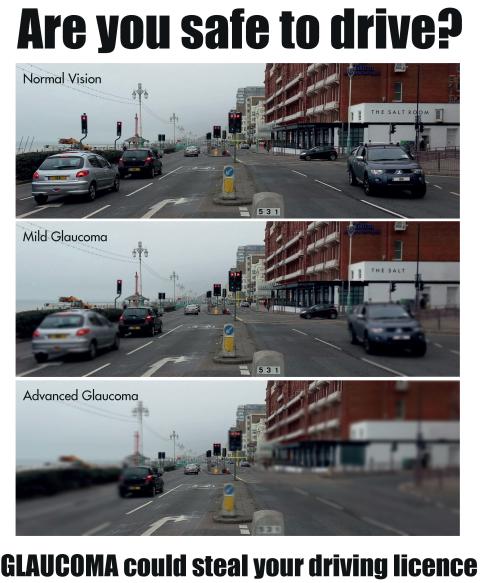
Having family members with glaucoma increases the risk of developing the condition. This is close to home for us, both having parents with glaucoma. Sally says “Families need to talk about eye health. July’s Glaucoma New Zealand Awareness and Appeal month will encourage this.” The importance of early detection is that glaucoma can be treated. This means someone with glaucoma will have their eyesight to read and drive, for many years.
To support Glaucoma New Zealand’s annual Appeal month we will be donating $2 from every eye examination in July. We especially look forward to seeing people 45 years and older who have never had their eyes checked.
Relief for Dry Eyes
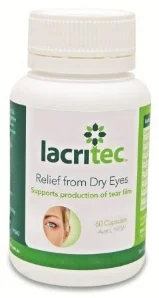
Many things can cause dry eyes - the environment, medication, surgery, nutrient deficiencies and hormonal changes are some examples. And as we age our tear volume also decreases. There are two ways to approach dry eye treatment; 1) improve natural tear production, the tears your eyes produce, and 2) use supplementary eye drops, gels, sprays and ointment.
To improve your natural tear film we now have a new product - Lacritec.
Lacritec is a supplement so it works from the inside out, targeting the root cause of dry eye. It contains a patented blend of DHA & EPA Omega-3 essential fatty acid from Fish Oil, ALA Omega-3 sourced from Flax Seed oil, and gamma-Linolenic acid (GLA-Omega-6 faty acid) from Borage Oil. GLA cannot be easily obtained from diet alone.
Taking this supplement may replace the need for eye drops. Available in the practice now. $45.90 (3 or more $37.00)
Order Fitovers Online
We recommend Fitover sunglasses. Fitovers are a handy way to add sun protection over your regular glasses. New designs are sleeker than the original square black boxy models - lots of colours and smaller fittings. There are three lens choices; Grey, Amber and Yellow. Amber is popular to improve colour contrast. We find people with early cataracts like the yellow tint and this improves clarity of vision as well.
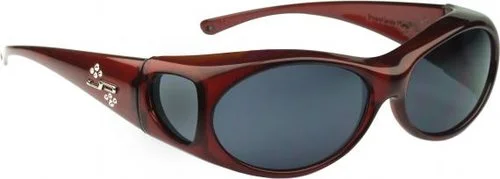
Now we are now selling fitovers through our website. If you can't get in to see us, or want to do some research check out our online shop.