Helping Your Child Develop Good Vision Habits - How Behavioural Optometry Works

Vision is more than eyesight – it is how your child interprets, understands and acts upon the information coming in through their eyes. Many children have normal 20/20 eyesight yet struggle in the classroom. This can be due to problems with:
● Eye movements
● Eye teaming
● Eye-hand coordination
● Visual form perception
● Long-sightedness
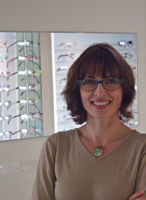
Sally Adams B Optom Cert OcPharm PG Dip Sci

Sally Adams B Optom Cert OcPharm PG Dip Sci

Visual skills normally improve over time as a child develops. If there are areas where your child is not progressing or school performance is declining, we recommend a full vision assessment with Sally Adams. Sally has completed three specialized Behavioural Optometrist Extension courses. Behavioural Optometry is described as special interest in vision beyond the eyeball. An assessment  with Sally can identify vision problems which can be improved with glasses and Vision Therapy. 

What you can do to help your child develop good vision habits:

● Check your child keeps both eyes the same distance to the page or screen, at a distance at least a forearms distance from their chin for reading, or arms distance for computer screens. 

● Reading or writing is best on a 20 degree slope rather than flat on the desk.
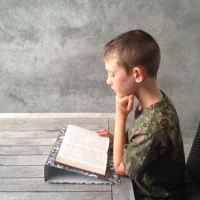
● Encourage your child to look up and refocus in the distance after every page they read, and at regular intervals when using a screen.

● Sit in a balanced upright position, both feet on the floor; this reduces distraction from fatigue and discomfort while doing homework, reading, drawing, using a computer or tablet.

● All students of all ages and abilities work better in short bursts of 10 minutes or less, especially those with vision problems. Make sure your child gets up and moves around, ideally goes outside to play after each 20 - 30 minutes of reading, writing or computer / screen time.

● Encourage your child in sports and outdoor activities. This improves eye-hand co-ordination, spatial and other visual skills as well as improving concentration.

If you have any questions or would like further information please contact us.
FAQ - Progressive Lenses

You don't have to go far to hear a bad story about how difficult it is to get used to progressive, or graduated lenses.  People might tell you about having to lift your chin, or they have difficulty when you are reversing a car. Yet many people successfully use progressives every day, ourselves included.  Here are some of the FAQs about progressive lenses.

Zones in a progressive lens.

Zones in a progressive lens.

What will I notice when I start to wear my progressives?  You will notice areas of soft focus at the edges of your vision.

Most people will move their head more in the first few days wearing progressive lenses. This quickly becomes more natural as you adjust into the correct position automatically.

We recommend tucking your chin when walking down stairs.

Will I have to lift my chin in order to read with the progressives? Once you are used to your progressives you will look through the correct zones without having to adjust your chin. Looking down will be clear for reading, and when you look into the distance you will be looking through the upper portion of the lens.

How should I use my lenses to help adapting to them?  Ideally you should wear your new progressive lenses every day from the very beginning - morning until evening. Avoid switching back and forth between your new glasses and older prescriptions.

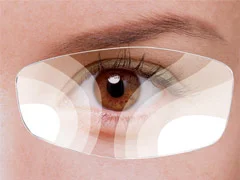
View through a progressive lens.

View through a progressive lens.

Do I have to wear my progressive lenses all the time?  No. Many people successfully wear their progressives only part time, e.g. at work, or indoors at home. It is useful though to wear new glasses all day for a few days while you are adapting to the new prescription.   

I am aware of blur to the sides? Remember to point your nose at what you want to look at. You will become less aware of the vision at the sides as you use the lenses more.

Should I drive in my new progressives?  To begin with take care when driving. When you are adapting to progressives in the early days it is best not to drive with them - wait until you are confident.  

If you have any other questions about adapting to progressives contact us. 

Novel light classroom could be the answer to shortsight.

Ian Morgan, a myopia (short-sight) researcher from the National University of Canberra, has developed a unique way to stop children developing myopia - teach them in a glass class room.  

Morgan's early research showed children who spent more time outdoors in natural light did better than their short-sighted contemporaries.  This was good but still had the hurdle of getting these short-sighted children to spend enough time outdoors to achieve this.  In a case which makes me think of bringing the mountain to Mohammed, Morgan developed a glass classroom.  The children in this environment did not become short-sighted at the same rate as those in regular class rooms.

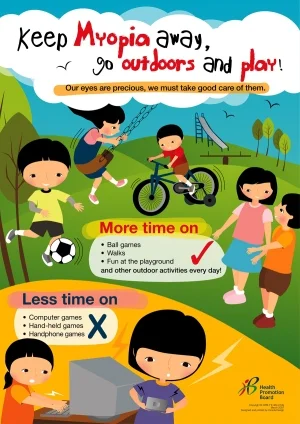
Singapore poster encouraging outdoor play.

Singapore poster encouraging outdoor play.

Whilst there are indoor light solutions the concept of actually spending more time outdoors well supported, and of course has other general health benefits. 

Read more about Morgan's research in this Nature article.