New Spectacle Lens for Myopia Control - Miyosmart

It is exciting to finally have a new option to help young children who are becoming myopic (short-sighted) - Miyosmart. This is a novel spectacle lens designed specifically to help slow the progression of myopia.

When young people present to us with blurred vision and we discover they are myopic, our hearts sink. We know, from clinical experience, that myopia is likely to get worse in the upcoming years. This results in the eye actually lengthening, which creates a lifelong risk of sight threatening eye conditions. (We have more information about the myopia epidemic, and myopia control contact lenses.)

Facebook post_artwork1.jpg

Miyosmart is a lens specifically designed to treat myopia, with studies that show this lens slows progression by half.

How does it work? The lens has a central zone, which will give clear vision in the distance. In the treatment outer zone of the lens numerous small dimples create defocus on the peripheral retina. This peripheral focus is believed to slow the growth and elongation of the eye.

Facebook post_artwork4.jpg

The study in Hong Kong followed 160 young people over two years. Myopia for the the 79 Miyosmart wearers progressed at half the rate of the group wearing the traditional single vision spectacle lenses.

How does this compare with other types of glasses lenses we have been using? Whenever possible we avoid single vision lenses, instead using lenses which are progressive. These have been the best option and evidence from clinical studies suggests myopia is slowed by about a third.

Other treatment options are contact lenses and Atropine eye drops. The results for Miyosmart match these. So this creates a very exciting treatment option for children not able to manage contact lenses.

Would you like to read more about Myopia check out our Myopia Resources & Links.
What we are wearing - Veronica in Anne et Valentin

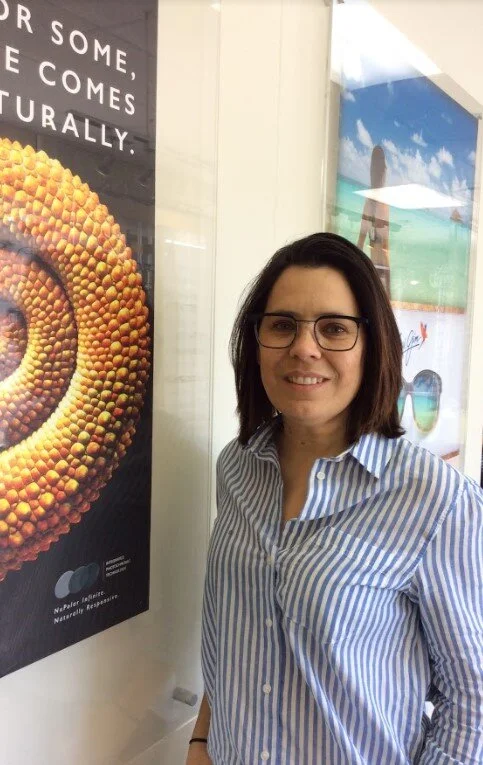
Veronica has been our receptionist for the the past year, you may have already encountered her distinctive Colombian accent. Veronica’s first pair of prescription glasses were from Mexico, where she was living in her teenage years. She is vague about the frame but remembers photochromic lenses, and she thought having glasses was pretty cool. Since then she has had different glasses over the years but never worn full time. She tells me none were as memorable as the eyewear she has chosen since joining us. Check out her recent new glasses.

VF 2 cropped.jpg

Frame: ANNE ET VALENTIN Recover

Lens: Hoya Sync* III lenses with Bluecoat Diamond Finish anti-reflection coating.

*Sync lenses have a boost in the lower lens, similar to a progressive design, but softer zones. Ideal for younger wearers including people who spend a lot of time on phones and screens.

This is your second Anne et Valentin frame.

Veronica: I just love their range. This frame is the complete opposite in style, fine and light after my ‘Diddley’ model which was solid acetate. But it still makes a statement.

How do you find the Sync lenses?

Veronica: They have taken some adjustment. I find the extra strength in the lower lens is good

McDonald Adams is one of 1500 carefully selected retailers world wide.

Anne et Valentin are a French brand born from the wild dream of two opticians from Toulouse, a town in the South-West of France. The couple, looking for graphic and original frames for their friends, decided to create what they couldn’t find. Today, still driven by our fierce independence and our familial state of mind, we continue to develop a vision that embodies our research, fueled by the highest standards and our love for the object itself.

At a time when most of our manufactured products come from South East Asia, this company is still 100% based in France. They describe “Made In France” as a moral commitment. “We have been working with the same factories located in the French Jura mountains since we started, 30 years ago, aside from a few titanium models that we manufacture in Japan, because the very best titanium is Made in Japan.”

Red Light Helps Aging Eyes

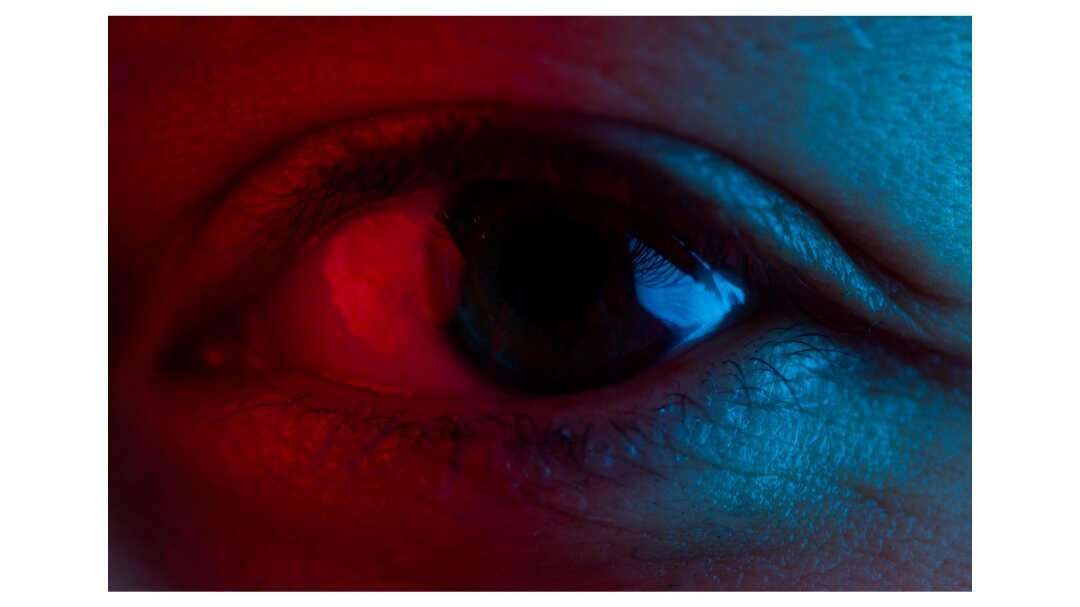
In recent times there has been a lot of information about the potentially harmful effect of blue light on eyes. Here’s something from the other end of the spectrum - red light which could prove helpful. A study has found that staring at a deep red light for three minutes a day improved declining eyesight. This may lead to home-based eye therapies.

eye+with+red+light.jpg

At around age 40 years the retinal cells in the eye begin to age as the cell’s mitochondria start to decline. These mitochondria have high energy demands, and there are a lot of them in the eye’s photoreceptor cells in the retina. This means the retina ages faster than other organs as the photoreceptors lack the energy to perform their normal role.

“Mitochondria have specific light absorbance characteristics influencing their performance: longer wavelengths, red light, spanning 650 – 1000nm are absorbed and improve mitochondrial performance to increase energy production,” said Professor Glen Jeffery, University College of London Institute of Ophthalmology.

The retina’s photoreceptor population is formed of cones and rods. Cones mediate colour vision and rods give peripheral vision and adapt vision in low/dim light.

Rainbow.png

In this study candidates were first tested for rod and cone sensitivity. They had a small LED torch to take home, and look into its 670nm light beam for three minutes a day for two weeks, before being re-tested.

Colour contrast sensitivity improved by up to 20% in some people. Improvements for some were more significant in the blue part of the colour spectrum which is more vulnerable in ageing. Rod sensitivity also significantly improved in this group, though less than contrast.

Hopefully this might translate into a home therapy - watch this space.

Contact Lens Reminder - No Water

A recent study is a reminder about avoiding water in contact lens care. The study, at the University of New South Wales School of Optometry and Vision Sciences, showed using a simply sticker “No Water” infographic on contact lens cases was a useful tool to remind people of the dangers of exposing contact lenses to water.

It is well known that water exposure is associated with contact lens eye disease (including microbial keratitis and sterile corneal infiltrates). Despite this, water contact is common! Wearers handle contact lenses with wet hands, shower and swim in contact lenses, or use water to rinse their lenses and/or storage cases.

The study, by Memoona Arshad, Dr Nicole Carnt, Dr Jacqueline Tan and Professor Fiona Stapleton, examined whether a visual reminder on storage cases as a prompt to avoid water could change behaviour.

Caution (1).png

Two hundred daily lens wearers were randomised to either receive a storage case with or without a ‘no-water’ sticker. Both groups also received written information on how to look after contact lenses. At the start and after six weeks, participants completed a self-administered lens hygiene questionnaire.

There was also microbial analysis of used storage cases, collected at both study visits. Analysis showed the change in water-contact behaviour resulted in less storage case contamination over time.

Of the 200 participants, the researchers found that after six weeks, endotoxin levels reduced significantly in the test group (compared with the control group). Additionally, they found that ‘nowater’ lens case stickers improved overall water contact behaviours.

So a simple reminder of what to do, or not do can bring results.

The study result has been picked up at the International Standards Organisation (ISO). They commented , “this is an exciting development, as this simple and cost effective intervention can improve behaviour and lower water bourne case contaminants.”

 The concept was devised by a patient with a severe eye infection, and has potential to save vision through a safety message.

The hope is that it becomes a standard printed warning on contact lens paraphernalia.

What we are wearing - Diane in Koali

Asking Diane about her first pair of glasses draws a blank. She was 19 at the time! There is no evidence of her second pair of glasses - photochromics in a large round frame worn as a back up to contact lenses when she was traveling around Europe. She says she took them off in every photo.

Image-1.jpg

It is a different story when it comes to her recent glasses.

Frame: Koali model 2005K colour ON04 50-20

Lens: Hoya Mystyle Profile Modern progressive, 1.53 Phoenix, Sensity Brown with a Diamond Finish anti-reflection coating.

You have worn Koali frames (by Morel) before.

Diane: I have a whole range of Morel frames. They are light and this is a good shape with photochromic lenses.

How do you find the Sensity Brown lenses?

Image-1 (1).jpg

Diane: They are excellent all rounders which I can wear all the time, walking the dog, gardening, reading in the sun, away camping. The tinting adjusts to a comfortable level depending on the level of brightness. These photos were on a dull day, so the lens is not super dark, but still gives glare protection. I like the brown because it gives improved clarity of vision.

I think everyone should have at least one pair of photochromic lenses. I still love my prescription sunglasses, which are polarized, and a fashion sunglass shape, but these are brilliant for all occasions.

Diane’s frame are made by French eyewear maker Morel. This family owned company began in the upper Jura region, known as the cradle of French eyewear. Today, 280 people work for Morel, with expertise from design to production, commercial, logistics, and administration. Morel has a complete and complimentary team, producing a turnkey offer: from the first draft to the final wearer.

And some background on Koali: Morel’s Koali collection is a feminine assortment that provides women with the most definitive option of great eyewear designs. The heart of the collection is inspired by creativity that is incredibly modern and sophisticated.

World-first Clinical Trial Shows Vitamin B3 Promising for Glaucoma

According to a world-first clinical trial, vitamin B3 (nicotinamide) could play an important role in protecting against nerve cell damage that leads to blindness in glaucoma.

download.jpg

Results of the trial at the Centre for Eye Research Australia (CERA), have been published. They show ‘significant improvement’ in visual function of glaucoma patients who received a daily high dose (3 grams of nicotinamide for 12 weeks) in addition to their regular treatment to reduce eye pressure.

We now need a longer term study to know conclusively whether nicotinamide delays glaucoma progression more than simply using eye pressure lowering medications alone

Dr Flora Hui, from CERA, said a larger international trial was now needed to determine if the improvement shown could be sustained over the longer term to reduce the progression of glaucoma.

“For the first time, we have shown that daily high doses of vitamin B3 can lead to early and significant improvements in patients who are also receiving traditional treatments to lower eye pressure,” Dr Hui said. “As a safe therapy, that is well tolerated by patients, vitamin B3 has potential as a clinical supplement. “

Glaucoma is the world’s leading cause of irreversible blindness, affecting more than 60 million people worldwide. The disease, which leads to vision loss when cells in the optic nerve and retina are lost, is usually treated with eye drops or surgery to reduce eye pressure. There are currently no treatments to protect cells from further damage or to improve cell function.

CERA’s trial followed 57 patients, who received both placebo or vitamin B3. Visual function was tested using electroretinography, a diagnostic test which measures electrical activity in the cells of the retina, along with visual field testing. The study found that for some people, high-dose nicotinamide significantly improved how nerve cells were functioning in the eye.

“A larger study will help us determine whether vitamin B3 should be taken on an ongoing basis by glaucoma patients.”

Earlier pre-clinical research in the US showed that vitamin B3 could prevent optic nerve degeneration – but this is the first time similar results have been witnessed in a human trial.

“Like adding oil to a car engine to allow it to run smoothly, vitamin B3 could be used to protect cells from damage and help those that have been affected by glaucoma work better.”

For those of us with a strong family history of glaucoma, and increasing risk with every year of increasing age, this is very encouraging.