What to expect at an eye examination?

If you are coming for your first eye examination what can you expect?

The foundation is your concerns. We would like to hear of any issues you have with your eyes, your vision, or your glasses and any problems you may have had with your eyes in the past, even if it is years ago. This is all useful and important.
Email newsletter montage 074.jpg

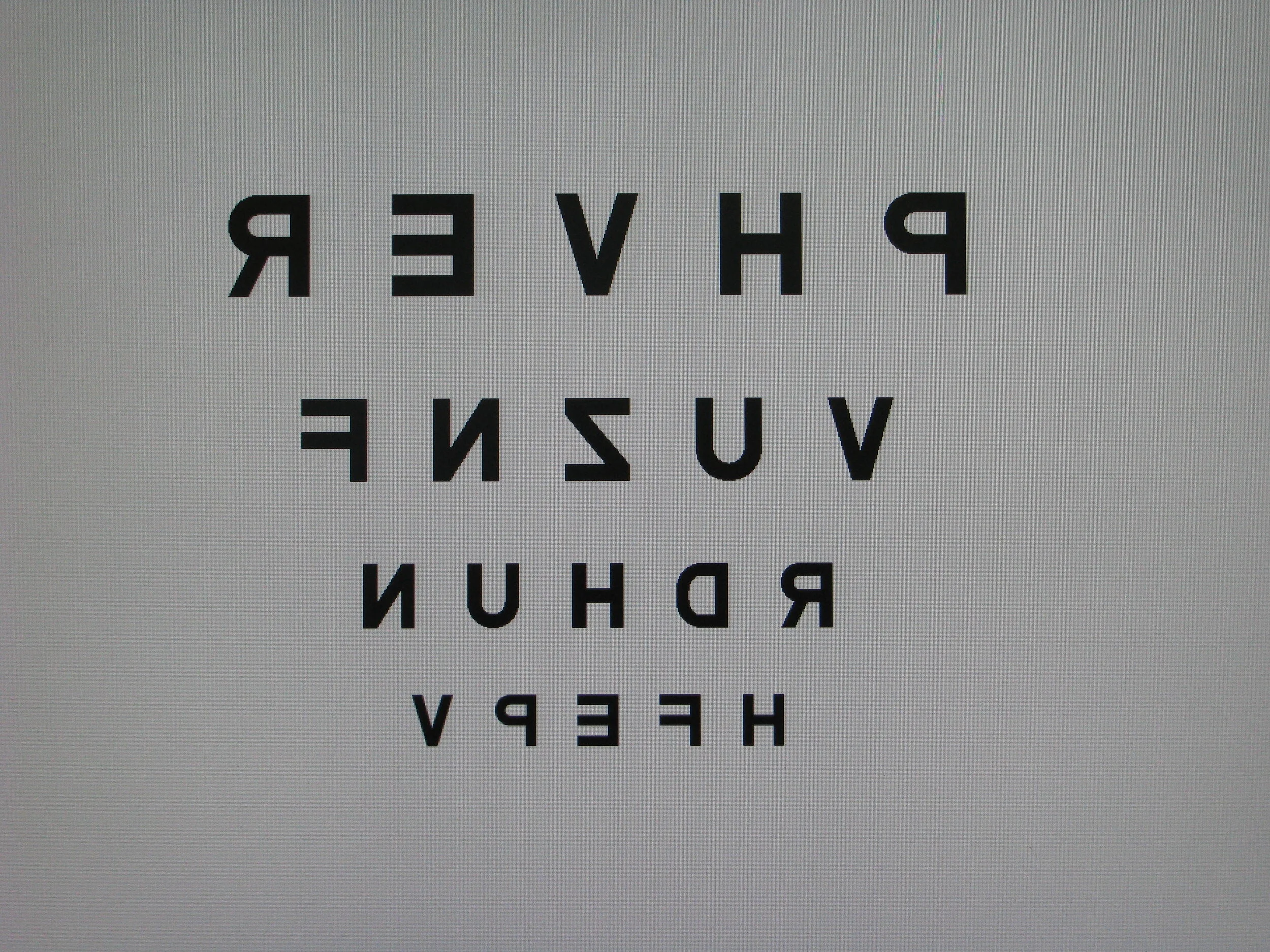
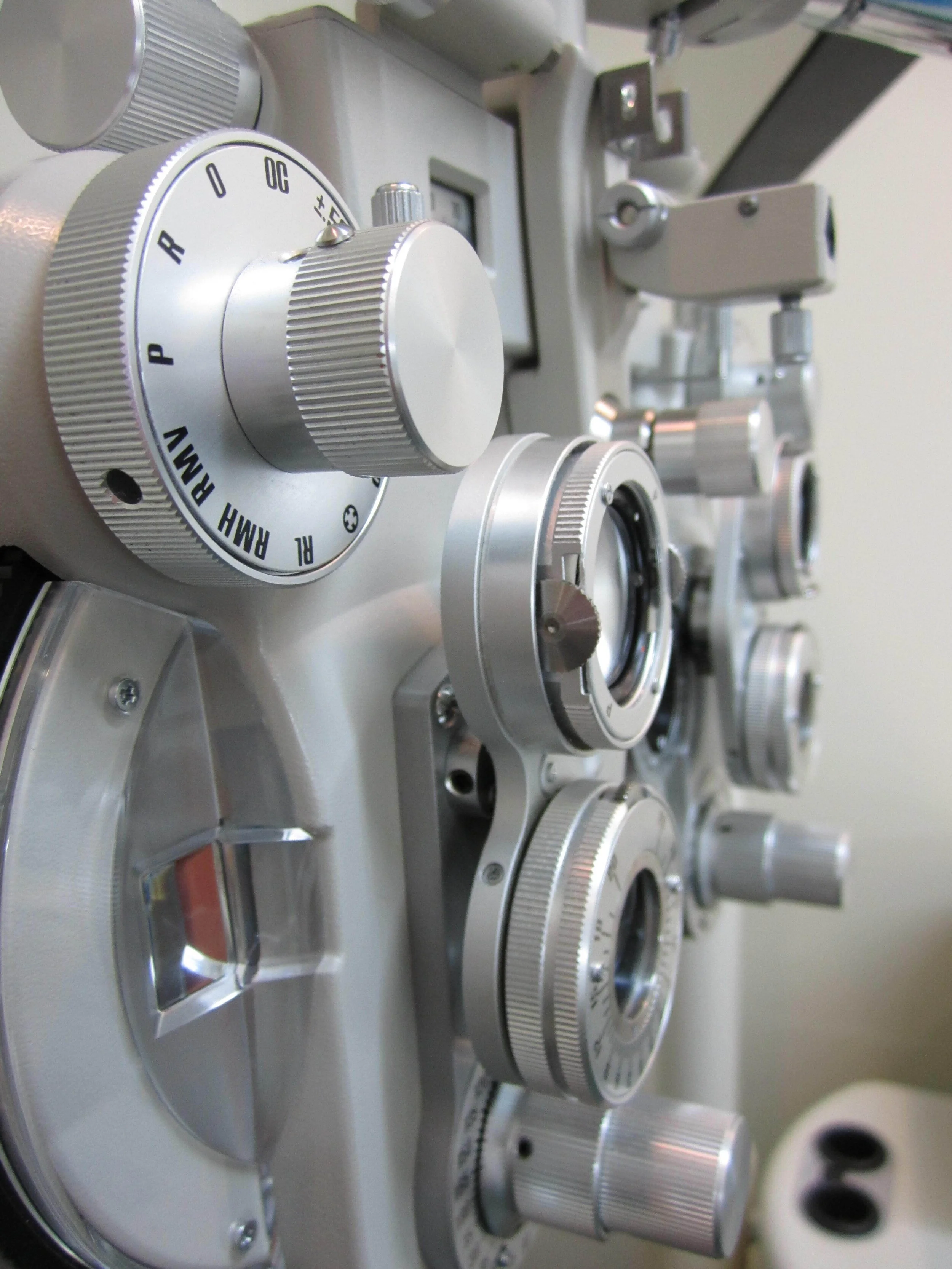
Your eyesight will then be measured - “what size letter can you read on the chart”. Next will be a series of questions, “which is better lens 1 or 2”, as we refine and optimize your vision. The end result is a prescription which we can use for any glasses, or simply to compare with your existing pair.

Onto the health checks when we will examine your eyes on the microscope, starting at the front with the lids and eyes surface, moving through to the retina and nerve at the back (read more about what we see inside your eyes.) We will measure the eye pressure with a tonometer. This is important because increasing eye pressure means a greater the risk of getting glaucoma.
Sometimes we will recommend further testing, commonly a peripheral vision screening test. This test shines light in your field of vision where there would be reduced sensitivity in early glaucoma. We often use OCT scans to show a more detailed picture of the retina inside the eye.

With all this information we can help work out the solution for any difficulties you are having. Or simply be able to reassure you that your eyes and vision all look good - which is worth coming in for.

If we are recommending glasses, either first time glasses or a change to your current glasses, we will show you what to expect by mocking up lenses in a trial frame. Our team includes Dispensing Opticians who help with lenses, frames and sunglasses choices.

If you have any questions about having your eyes checked, don’t hesitate to contact us.

Things we can see in your eyes.

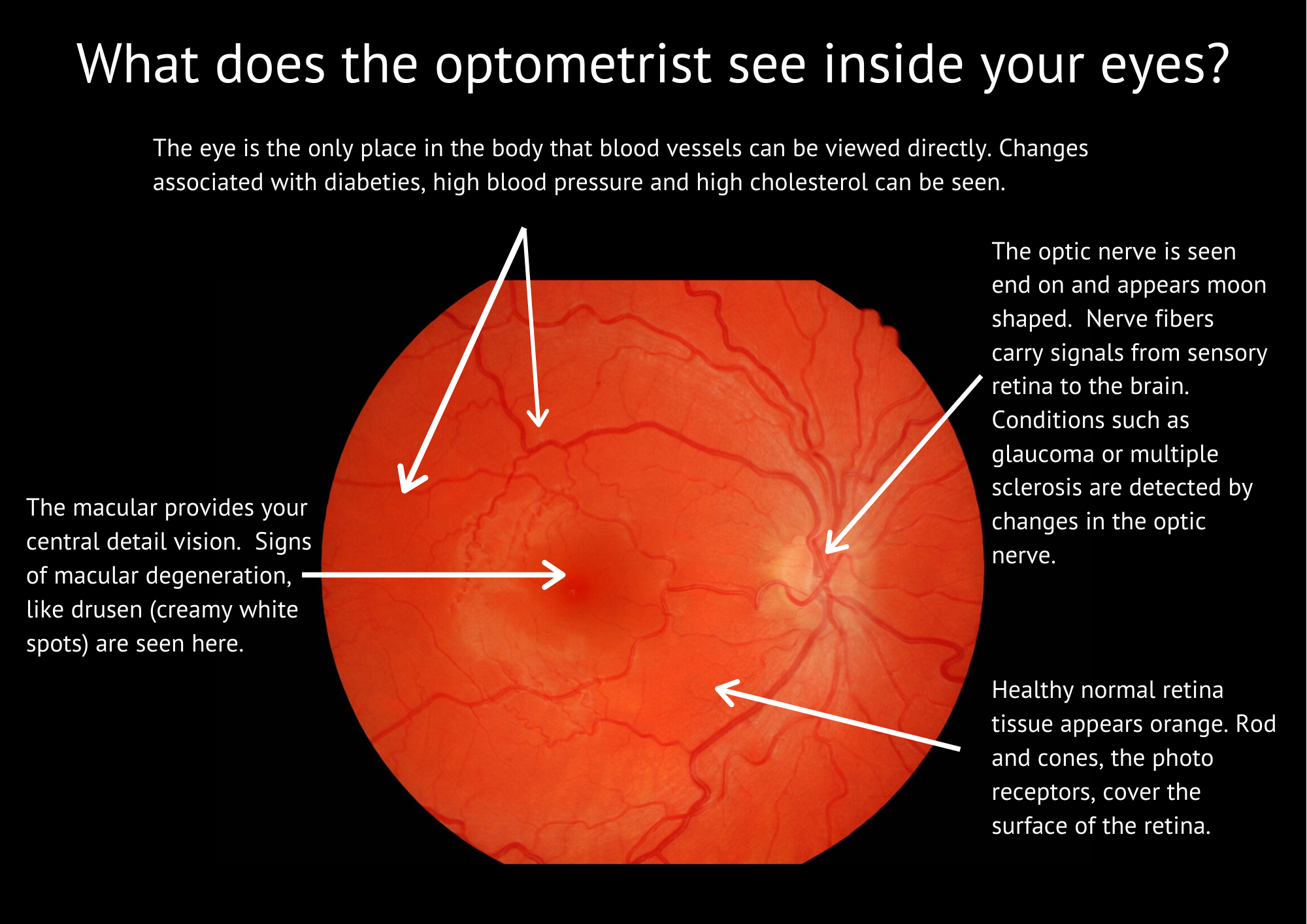
As part of every eye check we examine your eyes with a microscope - have you ever wondered what we can see? Here is the big reveal!

What does the optometrist see inside your eyes_.png

A lot of the tissue in the eye is transparent - so that light can pass through to get to the retina. Let’s start at the front - the cornea. We often see evidence of previous infections or injuries. In the fluid filled chamber inside the front of the eye our microscope allows us to see cells floating. Checking the lens we look for early signs of cataract. Then we see the vitreous gel, where we often find the ‘floaters’ which people describe for us. Finally the retina comes into focus.

The retina is red - sometimes seen as a red eye in photos taken using a flash. We have a check list as we examine the blood vessels, the optic nerve and the macula.

Sometimes we want to go deeper - to ‘look’ at the layers of the retina in more detail. This is when we use OCT scanning technology. While the information this provides is quite amazing, it does not quite match to viewing down the microscope - seeing individual red blood cells tumbling along the capillaries at the front of the eye will always be special for me.

International Myopia Congress Tokyo

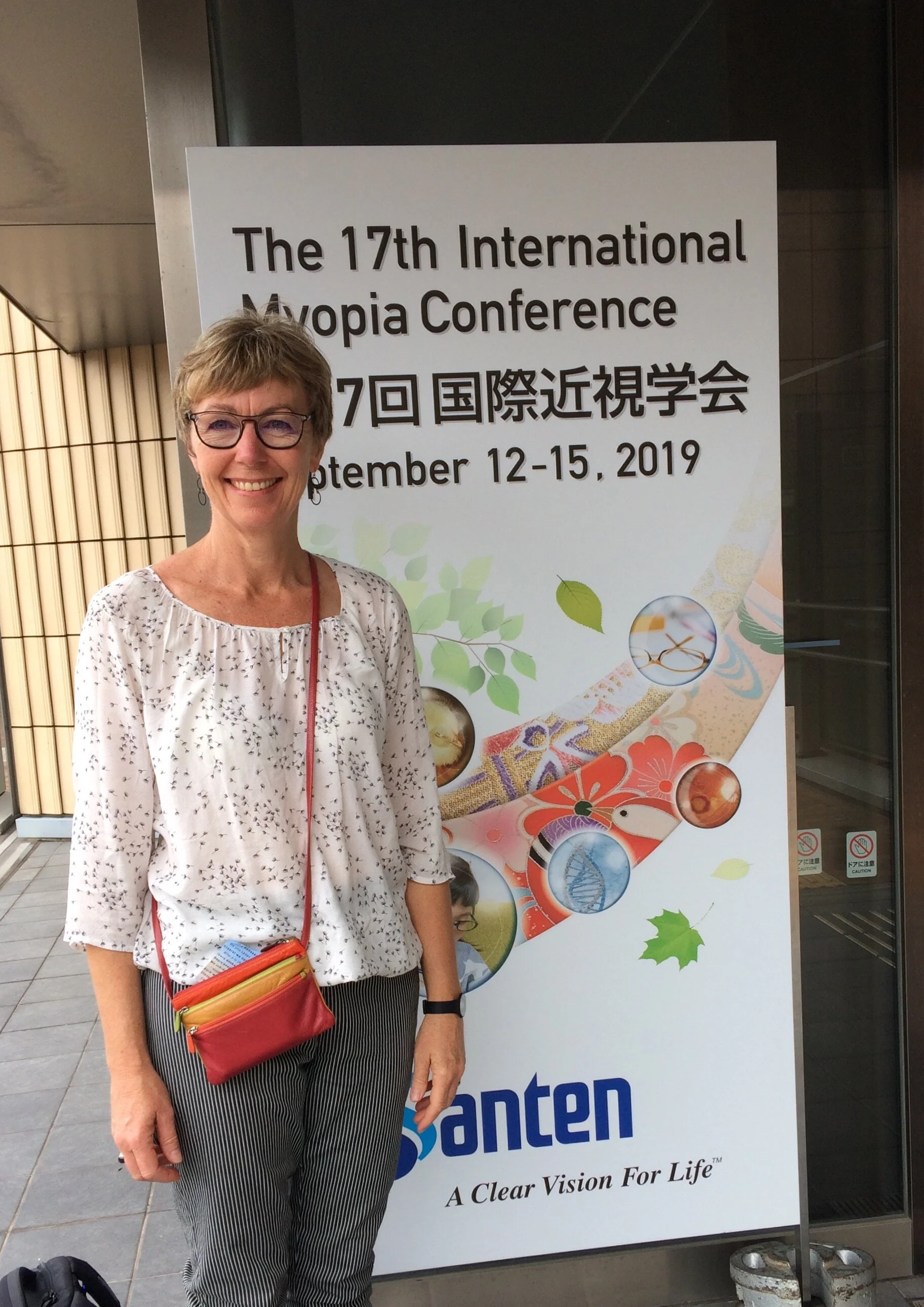
In September I was fortunate enough to attend the International Myopia Congress, held in Tokyo (just ahead of the Rugby World Cup). Myopia, or short-sightedness, means vision close range is clear but things further away (TV, the board at school, road signs) are blurred.

FullSizeRender.jpg

As global rates of myopia increase rapidly, particularly in South East Asian countries, there are concerns about the long term impact this will have on future eye disease (risk of retinal detachment, macular degeneration and glaucoma increase with myopia).

The four day congress brought together researchers, academics and clinicians from all around the world and sessions were presented by authors of clinical and scientific research.

The community is trying is understand what causes myopia. This effort included studies into genetics as well as animal research. Other projects look at epidemiology, trying to figure out who is effected and identify environmental factors which may play a role. So far we know the importance of two hours per day time spent outdoors will delay the onset of myopia in children.

0YPuQ0d7_400x400.jpg

One day was dedicated to studies following intervention strategies, such as ortho-K contact lenses, and soft contact lens designs.

Rising rates of myopia have been described as an epidemic, and resulted in some large scale public health initiatives in Taiwan and Singapore. It was inspiring to hear from individuals who had played vital roles in pushing these program’s ahead.

800 delegates attended in Tokyo. The next congress will be in Rotterdam in 2021.

Ascend Contact Lens $50 Cash Back Offer

Summer is approaching and now is a good time to think about contact lenses. If you wear Ascend contacts, you might be eligible for this offer - a bonus when you order three months supply.

SKMBT_C353019100909100.jpg

If you have thought about trying contacts - here is a nice incentive. Come in and be fitted with lenses, order a three month supply and there is a cash back bonus.

ASCEND™ have a range of contact lenses which gives excellent options for both every day and occasional use - a practical alternative to glasses.

So whether you’re new to contact lenses or have been wearing them for a while, or perhaps you just want to try contact lenses for occasional use, talk to us.

Low Vision Support Group Meeting Monday 4 November

If you are struggling with your vision join our Low Vision Support Group. Meetings are at Summerset Village (Mansell Drive, Warkworth). If you, or a friend or family member, are struggling with vision please come along. People with glaucoma and macular degeneration are also welcome.

Our next meeting is 1.30pm Monday 4 November. We will have a demonstration of electronic magnifiers by Nashish from Humanware. These powerful magnifiers solve some of the frustrations of traditional magnifying lenses. Usually there is a trade off between the enlargement and the field of view - when the print is large enough to read you can only see one word at time. Electronic magnifiers solve this and many people love both the portable devices, as well as the larger screen magnifiers.

For more information you can call us, or just come along.