
People who are doing moderate to vigorous physical activity may significantly lower their risk of glaucoma, according to research presented at the 121st Annual Meeting of the American Academy of Ophthalmology (AAO). Tseng et al from the University of California, Los Angeles (UCLA) reported a 73% lower incidence of glaucoma among the most physically active study participants, compared with the least active.
Read moreDry Eye Assessment
Dry Eye occurs when there is inadequate tear film to protect the ocular surface. Symptoms include scratchy, gritty irritated eyes. Life expectancy, longer working careers, increased screen time, low humidity, metropolitan environment and diet are increasing the incidence of dry eye. Diabetes, smoking, contact lenses, eye surgery and medications can exacerbate symptoms. Mild dry eye can be annoyingly uncomfortable, and severe symptoms can limit activities such as work, socialising or travel, significantly reducing quality of life.
Read moreVisual Hallucinations are real
Charles Bonnet Syndrome (CBS) is the rather strange phenomenon of complex visual hallucinations in people with vision loss with no neurological or psychiatric problem. These experiences can be alarming for patients and their families - ‘Mum is seeing monkeys in trees’ will get our attention.
Read moreMacular Degeneration Trigger Enzyme Discovered
The discovery of a crucial trigger for dry macular degeneration (AMD) – an enzyme called cGAS – could lead to the development of a drug to prevent disease progression.
This discovery, at the University of Virginia School of Medicine, was a surprise. Drs. Jayakrishna Ambati and Nagaraj Kerur had determined that cGAS plays an important role in the body's immune response to infections detecting foreign DNA, but its role in dry AMD was unexpected.
Read moreAdvanced Glaucoma Training
Currently Claire is one of four optometrists completing Advanced Glaucoma Training with the University of Auckland. The course is designed to give experience in glaucoma management and collaborative care with ophthalmologists (eye specialists).
Read moreSlowing Myopia - OrthoK Case Notes
Fitting children with hard contact lenses which they will wear while sleeping at night may seem like a big undertaking, but the outcomes
continue to impress us. From the first morning these children see massive improvements in their vision - one of the most rewarding
aspects to this work.
When we met Jack* he was 6 years old, an outdoors boy who loved to read, struggling to see the whiteboard at school. Jack’s Mum is
highly short-sighted (-9.00D myopic), and his dad is moderately short-sighted (-2.50D myopic). Jack’s first prescription in December
2015 was -1.00D.
Jack also had poor visual efficiency, a risk factor for becoming more myopic. The first step was a behavioural optometry assessment
and vision therapy to improve his binocular vision. This was successful, but his distance vision remained blurred.
At the end of 2016 Jack got his first pair of glasses. To start he only wore his glasses a couple of times a week at school. Over a 6
month period, Jack’s vision got worse, by -0.50D. If he continued at this rate, by 18 years old his prescription could track towards -
11.00D increasing the risk of serious future eye problems (retinal detachment, glaucoma and maculopathy).
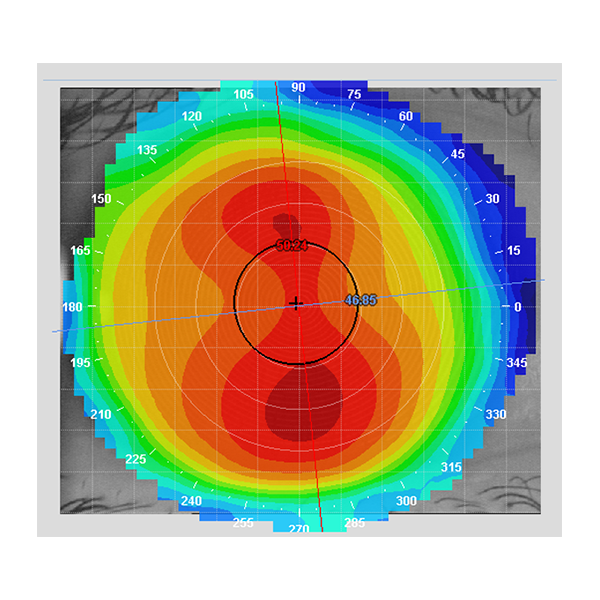
This year we have fitted Jack with custom made Ortho K contact lenses to wear while sleeping. This gives him clear vision the next day
once he takes out his contacts. Importantly, wearing these contact lenses can significantly slow down his myopia progression.
When we checked Jack after his first night wearing his contacts, he commented “I can see great” and his vision was 6/6 (equivalent to
20/20). He managed to take out his lenses solo on the second morning. There are more firsts; he was able to see his parents in the
back row of assembly when he won an award at school. His family report “we are so impressed with these lenses, Jack is really excited
to be able to see clearly and positive about the process.”
Jack will have follow-up checks every 6 months to monitor his vision. So far, after 2 months of treatment his vision has not changed at
all.
*name changed for privacy